
 1-844-397-8677
Boom Pump Configurations Explained: Which Works Best for Your Project?
Posted On: 04/17/2026 | Posted by: DY Concrete Pumps
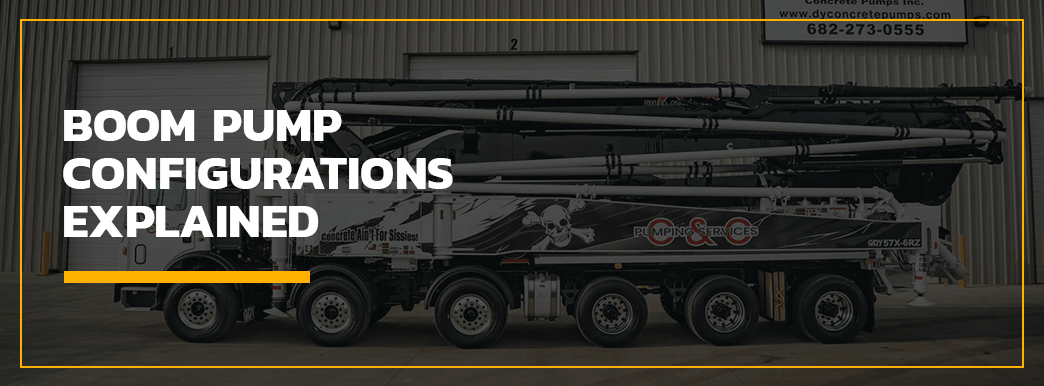
Choosing a concrete boom pump often starts with understanding its reach. However, many contractors find that reach alone does not determine how smoothly a pour runs. Site access, overhead obstructions, setup space and repositioning all influence productivity once work begins.
A boom that performs well on an open slab may struggle on a confined urban site. Likewise, a highly articulated boom can improve placement flexibility but introduce different maintenance and setup considerations. These trade-offs are why understanding boom pump configurations matters before renting or purchasing equipment.
Below, we explore boom pump configurations to help you choose the one that works best for your project.
Why Boom Pump Configurations Matter for Site Access and Efficiency
Boom design shapes how easily crews can work around real site constraints. This means that two pumps with similar reach can perform very differently.
Navigating Overhead Obstructions With Different Concrete Boom Types
Many sites include power lines, scaffolding, structural framing or nearby buildings that limit how a boom can unfold. Folding style affects how low the boom can deploy and how easily operators can position the tip without repositioning the truck. This becomes important during any projects where staging space is limited.
How Boom Pump Configurations Reduce Dead Zones
Dead zones occur when parts of the pour area cannot be reached from a single setup. Crews may need to pause work, reposition equipment and re-coordinate placement. Over time, these interruptions affect schedule reliability.
More articulated boom layouts help reduce these gaps. For example, reaching behind an existing structure or placing concrete between scaffold lines may be possible without moving the truck when articulation is available.
Benefits of Flexible Boom Pump Configurations for Cost and Performance
Selecting the right configuration has the following benefits, which influence usage and long-term operating costs:
- Higher usage across project types: Flexible layouts allow one pump to handle residential, commercial and infrastructure work instead of requiring specialized equipment.
- Reduced setup time and repositioning: When a boom can reach more areas from one position, crews spend less time relocating the truck.
- Improved placement accuracy: Greater control over boom movement enables consistent placement across different elevations.
- Lower operational disruption: Fewer interruptions during pours help crews maintain steady production.

Z-Fold vs. Roll-Fold vs. Hybrid Boom Layout
Folding configuration determines how the boom acts and adapts to site conditions. Understanding these concrete boom pump types helps teams match equipment to working environments.
Z-Fold Boom Pump Configurations for Tight Access Projects
The ZZ, Z-fold or double Z configuration emphasizes maneuverability. Sections unfold in alternating directions, allowing operators to make gradual adjustments as they work around obstacles. This approach is often useful on urban infill sites, renovation projects or pours where the truck cannot be positioned directly next to the placement area.
Roll-Fold Boom Configurations for Open Sites
The R, or roll and fold boom, typically deploys outward in a smoother motion, enabling faster setup on open sites. When access is straightforward, this layout can help crews begin placement quickly and maintain consistent coverage across large areas.
Hybrid Boom Layout Guide: RZ and ZR Configurations
Hybrid layouts include the ZR and RZ configuration. They combine characteristics of both folding approaches. These are often considered when site layouts evolve during construction. They can also be great when contractors handle a mix of project types, as they benefit from their versatility.
4-Section vs. 5-Section Booms
Section count affects articulation, reach control and movement precision. The decision between the two options typically involves balancing stability with flexibility.
4-Section Boom Pump Configurations and Stability Advantages
Four-section booms are often associated with predictable movement and structural simplicity. With fewer articulation points, operators may find positioning more straightforward on standard pours.
Operators may find the following benefits:
- Simplified maintenance planning: Fewer joints can reduce inspection frequency and service complexity.
- Strong performance on open sites: Projects with clear staging areas benefit from stable boom movement.
- Efficient for routine placements: Residential foundations and wide slabs often do not require additional articulation.
5-Section Boom Pump Configurations and Articulation Benefits
Five-section booms offer greater flexibility, improving placement in constrained environments. Extra joints allow operators to adjust positioning without moving the truck as frequently.
Operators may find the following advantages:
- Greater maneuverability: Additional articulation helps crews work around structures, staging equipment and elevation changes.
- Improved reach control: Fine adjustments support consistent placement across complex layouts.
- Broader project coverage: One pump may support a wider range of site conditions.
Best Boom for High Rises and Vertical Construction Reach
When evaluating the best boom for high rises, articulation is as essential as vertical reach. High-rise projects often involve staged pours, limited staging space and coordination with multiple trades. Being able to reposition the boom tip without relocating the truck can support workflow continuity across floors.
Concrete Pump Reach, Terrain and Setup Considerations
Configuration decisions should reflect how equipment interacts with real sites. The following factors help determine whether a configuration performs as expected:
- Chassis weight and permitting: Larger articulated booms can influence transport logistics and route planning.
- Outrigger footprint and setup space: Stabilization requirements affect where trucks can be positioned, particularly in dense urban environments.
- Maintenance considerations: More articulation introduces additional inspection points that require service planning.
- Terrain challenges: Uneven ground or restricted access can limit the effectiveness of certain configurations.
- Concrete pump reach versus maneuverability: Maximum reach may not translate into placement efficiency if positioning flexibility is limited.
Matching Boom Pump Configurations to Project Types
A practical boom layout guide connects configuration choices to real project demands. For high-rise construction, articulated booms support controlled placement across vertical staging areas. Flexible folding layouts help crews doing urban infill work navigate restricted access and overhead obstacles.
Stable configurations support efficient slab and foundation pours in residential developments, while large commercial slab projects typically prioritize reach and consistency over complex articulation. Versatile configurations adapt to evolving site conditions over the long term for general infrastructure projects.
Frequently Asked Questions
Get your pressing questions on boom pump configurations answered.
- How do boom pump configurations affect concrete pump reach? Effective reach depends on both length and articulation. Positioning flexibility often determines how much of that reach can be used.
- Are 5-section boom pump configurations always better? Not necessarily. Simpler layouts may perform well on predictable projects, while articulated designs support more complex environments.
- Do different concrete boom types change setup time? Yes. Folding style influences how easily the boom deploys around obstacles, which can affect repositioning frequency.
- How should teams approach a boom layout guide decision? Reviewing the mix of projects handled throughout the year helps determine whether your team should prioritize flexibility or simplicity.
Choose What Works Best for Your Project

Understanding section count, folding style and concrete pump reach allows teams to align equipment with how work actually happens. The right configuration supports consistent placement, reduces repositioning and helps maintain production momentum across projects.
DY Concrete Pumps supports contractors and fleet managers by helping teams evaluate boom pump configurations based on project demands, access constraints and long-term goals. We offer services across North America to ensure you gain access to the products you need. Contact us today for your boom pump needs.


